Fresh Tech Trends
AI & Machine LearningBiotech & HealthtechFuture of ComputingSustainable TechVenture & Startups
Fresh Tech Trends

Your daily briefing on the technology of tomorrow.

Artificial IntelligenceRoboticsInnovationAiManufacturingRenewable EnergySustainable TechDigital Health

Sections

  • AI & Machine Learning
  • Biotech & Healthtech
  • Future of Computing
  • Sustainable Tech
  • Robotics & Automation

More

  • Venture & Startups
  • Product Lab
  • Founders & Leaders
  • Enterprise & SaaS
  • Gaming & Immersive Tech
  • Writers

About Fresh Tech Trends

Fresh Tech Trends delivers essential news and in-depth analysis on the emerging technologies shaping our future. From artificial intelligence and biotech to quantum computing and sustainable energy, we provide the critical insights for professionals, investors, and enthusiasts.

  • Contact
  • Privacy Policy
  • Terms of Service

© 2026 Fresh Tech Trends. All rights reserved.

  1. Home
  2. /Robotics & Automation
  3. /AI Industrial Robotics Innovations Drive Economic Impact Ahead of 2026
Robotics & Automation

AI Industrial Robotics Innovations Drive Economic Impact Ahead of 2026

By 2026, factories will increasingly be run by 'agentic AI' systems capable of autonomous decision-making and physical interaction, a profound shift many industrial leaders are only just beginning to

BC
Benjamin Carter

June 23, 2026 · 3 min read

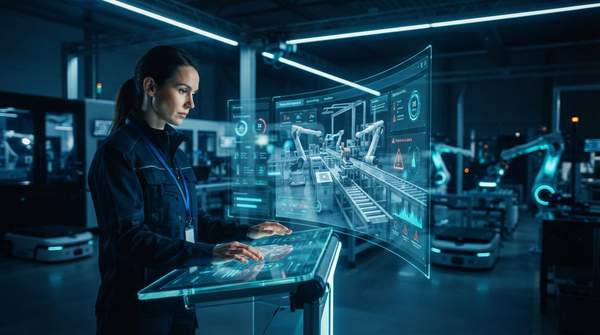
Advanced AI-powered robots operating autonomously on a futuristic factory floor, showcasing the next generation of industrial automation and its economic potential.

By 2028, factories will increasingly be run by 'agentic AI' systems capable of autonomous decision-making and physical interaction, a profound shift many industrial leaders are only just beginning to grasp. These advanced AI industrial robotics innovations will redefine productivity, moving beyond simple automation to self-optimizing processes. This transformation demands a fundamental re-evaluation of current operational models, extending beyond mere technological upgrades to impact workforce structure and strategic planning.

However, industrial AI is rapidly evolving into autonomous, physical systems, but the human workforce and existing operational paradigms are not keeping pace with the necessary adaptations. This disparity creates a critical tension as industries confront an accelerating technological curve. Current training and skill development programs often lag behind rapid advancements in AI applications, exacerbating this growing divide.

Businesses that fail to strategically integrate agentic and physical AI into their industrial operations by 2028 appear likely to face significant competitive disadvantages and workforce disruption. This impending transformation necessitates immediate and deliberate action, not just in technology adoption, but also in human capital development. The speed of this transition will determine future market leadership, separating agile innovators from those entrenched in outdated operational frameworks.

The Rise of Autonomous Industrial Intelligence

The industrial sector stands at a critical juncture, marked by the emergence of highly specialized artificial intelligence. Agentic AI, physical AI, and domain-specific industrial models are identified as key industrial technology trends for 2026, according to IoT Analytics. These trends mark a departure from earlier forms of automation, which primarily involved programmed, repetitive tasks.

Agentic AI systems operate with independence, making decisions and executing actions without constant human oversight. Think of an agentic AI as a chess grandmaster making moves based on complex strategic analysis, rather than a simple machine following pre-set instructions. This capability allows for dynamic adaptation to changing conditions on a factory floor.

Physical AI, conversely, refers to artificial intelligence embedded directly into robotic hardware, enabling advanced manipulation, navigation, and interaction with the physical world. This integration allows robots to perceive their environment, understand complex tasks, and execute them with precision and adaptability. For instance, a physical AI-powered robot might identify an anomaly on an assembly line, diagnose the issue, and autonomously recalibrate its tools or even perform minor repairs. The effectiveness of these systems is further amplified by domain-specific industrial models, ensuring AI solutions are highly tuned instruments for specific manufacturing challenges, not generic tools. These advancements collectively enable sophisticated autonomous decision-making and physical interaction, fundamentally altering how production lines operate and demanding equally specialized human oversight and collaboration skills.

Anticipating the Next Wave: Automate 2026

Automate 2026, North America's largest robotics and automation event, will take place in Chicago, according to Robotics Tomorrow. Such large-scale gatherings signal the imminent mainstream adoption of emerging AI robotics technologies and the industry's collective focus on their rapid development. Automate 2028 will serve as a crucial benchmark for the progress of physical AI and agentic systems, allowing companies to assess their competitive standing and confirming these technologies are moving beyond theoretical concepts into practical, deployable applications. The progress of physical AI and agentic systems indicates a compressed timeline for industrial adaptation.

The sheer scale of Automate 2028 indicates the window for gradual AI adoption in industry is closing. Companies must now aggressively integrate advanced AI or risk being left behind. This event will likely accelerate the practical integration roadmap for agentic and physical AI technologies, pushing companies to make strategic investments sooner. The confluence of a major industry event like Automate 2028 and the identified emergence of highly autonomous AI trends in the same year demands immediate strategic shifts from businesses across the manufacturing spectrum, moving beyond incremental improvements to foundational changes in operations and workforce development.

By 2026, industrial leaders who fail to strategically invest in AI integration and workforce retraining will likely find their operations critically bottlenecked and their market position severely eroded.
Related Coverage from Robotics & Automation

  • Kawasaki Robotics Prepares AI Platform for 2026 Automation
  • AI drives Oracle job cuts, Meta's workforce reshuffle
  • AI world developments and trends in 2026 face unforeseen autonomy costs
  • boosts engineering output, creating more

Tags

AiRoboticsIndustrial AutomationFuture Of WorkEconomic ImpactManufacturingAgentic Ai
BC

Benjamin Carter

Contributing Editor, Deep Tech

Benjamin Carter, a Contributing Editor for Deep Tech at Fresh Tech Trends, covers the future of computing, robotics, and sustainable engineering. He delivers authoritative, highly technical deep dives that demystify complex engineering marvels for readers seeking critical insights.

More from Robotics & Automation

BD Vmax 160 pharmacy robot efficiently dispensing medication packages in a modern hospital pharmacy.

Fairview Health Deploys BD Vmax 160 Pharmacy Robot

At Fairview Health Services, a single BD Vmax 160 pharmacy robot now manages up to 35,000 medication packages, picking them in under four seconds, a first for any U.

Benjamin Carter· Sep 14
Robotic arms and human workers collaborating on an advanced assembly line in a modern US factory, showcasing automation amidst labor shortages.

US Manufacturing Boosts Automation Amidst Labor Shortages

The number of industrial robot installations in the United States rose by 11% year-on-year, reaching 38,000 units in 2025, according to the IFR International Federation of Robotics .

Benjamin Carter· Aug 22
Robots are increasingly deployed in diverse sectors beyond manufacturing, including logistics, healthcare, and agriculture, showcasing a significant surge in automation.

Robot Orders Surge Past 8,900 as Automation Leaps Beyond Manufacturing

For the first time, non-automotive customers accounted for 56% of all robot orders in North America during Q2 2026, signaling a profound shift in industrial automation.

Benjamin Carter· Aug 16
Robotic arms assembling a Navy ship hull, showcasing advanced automation in defense manufacturing with HII, GrayMatter Robotics, and Path Robotics.

HII inks $900M in potential deals with GrayMatter and Path Robotics

Defense giant HII has committed to potential production agreements worth $900 million with robotics firms GrayMatter Robotics and Path Robotics, aiming to revolutionize Navy shipbuilding, according to

Benjamin Carter· Aug 7

Trending Now

1
What Makes Financial Professionals Pick Tom Hegna's On Demand Training: 5 Honest Reasons

What Makes Financial Professionals Pick Tom Hegna's On Demand Training: 5 Honest Reasons

Venture Startups· 1 view
2
A human worker and a collaborative robot working together safely and efficiently in a well-lit, modern industrial environment.

Human-centric automation: Key to worker trust and less anxiety.

Robotics Automation· 1 view
3
Futuristic AI defense technology with glowing neural networks and advanced hardware, symbolizing significant venture capital investment in national security.

StrictlyVC Los Angeles event focuses on defense tech AI fundraising

Venture Startups· 1 view
4
Scientists in a futuristic lab examining a holographic DNA model, representing the revolutionary impact of CRISPR gene editing on medicine and health.

What is CRISPR Gene Editing and Why is it Revolutionizing Medicine?

Biotech Healthtech· 2 views
5
US Commerce Secretary Howard Lutnick in a serious discussion with ASML leaders regarding advanced chipmaking tools and their potential presence in China.

US raises concerns with ASML on advanced chip tool in China

Ai Ml· 1 view
6
Futuristic music studio with AI interfaces enabling a DJ to remix songs, symbolizing the new Spotify and UMG partnership.

Spotify and UMG Strike Licensing Deal for AI Features

Ai Ml· 1 view