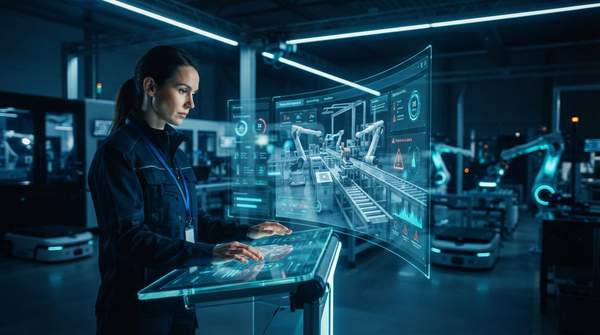
In the context of smart manufacturing, a digital twin is a dynamic, virtual replica of a physical asset or process, continuously updated with real-time data from sensors and IoT devices. This technology moves beyond static 3D models to create a live bridge between the physical and digital worlds, enabling companies to simulate, analyze, and optimize their operations with unprecedented precision. By providing a risk-free virtual environment to test scenarios, digital twins are fundamentally transforming core manufacturing functions, particularly in predictive maintenance, quality control, and supply chain management.
The power of a digital twin lies in its ability to mirror the entire lifecycle of its physical counterpart, offering a data-driven approach to decision-making that significantly improves efficiency and reliability. While the concept can seem abstract, its practical applications can be understood through a structured framework. An academic analysis highlights the International Organization for Standardization's ISO/DIS 23247 as a standard framework for implementing digital twin applications, providing a clear path from data collection to operational improvements in areas like predictive maintenance and quality control.
The Digital Twin Process Model: From Physical to Virtual Insight
The functionality of any digital twin application is built upon a continuous, cyclical process that translates physical reality into digital intelligence and then feeds those insights back to inform real-world actions. This operational model serves as the engine for optimization, creating a virtuous cycle of feedback and improvement. Understanding these interconnected stages is key to grasping how digital twins deliver value across different manufacturing scenarios.
The process begins with Data Collection at the source. Physical objects, such as machinery or an entire production line, are equipped with an array of sensors that capture a constant stream of data about their performance, condition, and operating environment. This is the twin's sensory input from the real world.
Next, a robust Data Connection ensures this information is continuously transmitted from the sensors to the digital twin software. This live, real-time data feed is critical, as it guarantees the virtual model remains a faithful and up-to-the-minute representation of the physical asset's current state.
The incoming data populates the Virtual Model, a sophisticated digital replica designed to mimic the behavior and characteristics of its real-world counterpart. This is more than a visual representation; it is a complex simulation environment that understands the physics and operational logic of the asset.
Within this virtual space, Analytics and Simulation take place. The digital twin uses the collected data to run advanced simulations, test "what-if" scenarios, and apply predictive algorithms to forecast future performance and potential failures without impacting physical operations.
This analysis produces Actionable Insights. Instead of presenting raw data, the system translates its findings into specific, concrete recommendations. These can range from alerts about impending equipment failure to diagnostics for production errors or suggestions for process optimization.
Finally, the cycle is completed through a Feedback Loop, where these insights are used to influence the physical world. This could involve automatically adjusting machine settings, triggering a maintenance work order, or alerting human operators to a potential issue, thereby closing the loop and enabling proactive, intelligent control over the manufacturing process.