Fresh Tech Trends
AI & Machine LearningBiotech & HealthtechFuture of ComputingSustainable TechVenture & Startups
Fresh Tech Trends

Your daily briefing on the technology of tomorrow.

AiManufacturingRoboticsArtificial IntelligenceMachine LearningAutomationTechnology TrendsRenewable Energy

Sections

  • AI & Machine Learning
  • Biotech & Healthtech
  • Future of Computing
  • Sustainable Tech
  • Robotics & Automation

More

  • Venture & Startups
  • Product Lab
  • Founders & Leaders
  • Enterprise & SaaS
  • Gaming & Immersive Tech
  • Writers

About Fresh Tech Trends

Fresh Tech Trends delivers essential news and in-depth analysis on the emerging technologies shaping our future. From artificial intelligence and biotech to quantum computing and sustainable energy, we provide the critical insights for professionals, investors, and enthusiasts.

  • Contact
  • Privacy Policy
  • Terms of Service

© 2026 Fresh Tech Trends. All rights reserved.

  1. Home
  2. /Robotics & Automation
  3. /US Manufacturing Boosts Automation Amidst Labor Shortages
Robotics & Automation

US Manufacturing Boosts Automation Amidst Labor Shortages

The number of industrial robot installations in the United States rose by 11% year-on-year, reaching 38,000 units in 2025, according to the IFR International Federation of Robotics .

BC
Benjamin Carter

August 22, 2026 · 3 min read

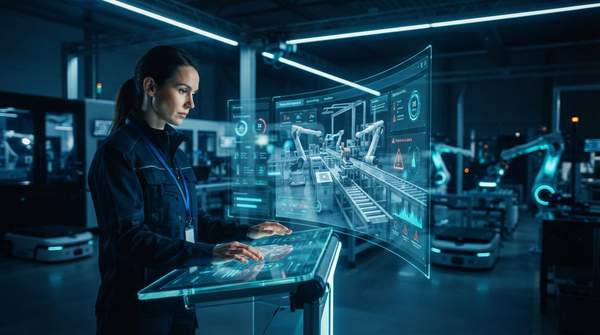
Robotic arms and human workers collaborating on an advanced assembly line in a modern US factory, showcasing automation amidst labor shortages.

The number of industrial robot installations in the United States rose by 11% year-on-year, reaching 38,000 units in 2025, according to the IFR International Federation of Robotics. The 11% year-on-year growth in industrial robot installations reflects a renewed push by American factories to integrate advanced automation, addressing critical operational needs. US manufacturing rapidly adopts automation to address labor shortages, but its overall robot density still places it behind several global competitors. While on a positive modernization trajectory, US manufacturing must accelerate its automation efforts to truly compete on a global scale and secure its future.

The Forces Driving America's Automation Boom

The US industrial modernization outlook remains positive, driven by factory reshoring and a persistent shortage of skilled labor, according to the IFR International Federation of Robotics. Factory reshoring and a persistent shortage of skilled labor compel manufacturers to increase automation investments, as companies struggle to fill critical roles. Manufacturers increasingly turn to automation as a strategic imperative to overcome labor challenges and capitalize on reshoring opportunities, ensuring cost-effectiveness and supply chain resilience domestically.

For instance, an automotive parts supplier moving production back to Ohio might invest in robotic welders and assembly arms. This reduces reliance on a shrinking pool of specialized welders while enabling faster, more consistent output. Such investments enable entirely new production models within US borders, moving beyond mere task replacement.

Catching Up: The US in the Global Automation Race

Despite domestic growth, the United States faces a substantial challenge in achieving global leadership in automation.

  • Robot density in the US manufacturing industry measures 307 industrial robots per 10,000 employees, ranking it 8th worldwide, according to the IFR International Federation of Robotics.
  • China's annual robot installations reached 295,000 units in 2024, representing a 54% global market share, also reported by the IFR International Federation of Robotics.

The disparity in robot density and annual installations reveals a significant disparity: US industrial robot installations increased by 11% to 38,000 units, while China's installations are nearly eight times higher. This massive difference in deployment rates means US manufacturers are not just playing catch-up; they are falling further behind a global automation leader whose scale alters industrial competitiveness. Even rapid domestic adoption in the US is a comparatively small fraction of global automation efforts, making competitive parity increasingly difficult and posing a long-term risk to US manufacturing's global standing.
Automation: A Strategic Imperative for US Manufacturing

The strategic adoption of automation is no longer optional for US manufacturers; it is a fundamental requirement for sustained growth, resilience, and global competitiveness. Companies must analyze operational bottlenecks and invest in robotics to enhance efficiency and address labor market shifts. Failure to accelerate automation will deepen existing competitive disadvantages, particularly against nations deploying robots at a far greater scale.

How is automation impacting US manufacturing jobs in 2026?

Automation in US manufacturing is transforming job roles rather than solely eliminating them. While some repetitive tasks are automated, new positions emerge in robot maintenance, programming, and data analysis. Workers often transition to roles requiring higher skills in overseeing automated processes and managing complex systems, necessitating retraining initiatives.

What are the biggest challenges to automation in US manufacturing?

Key challenges for automation in US manufacturing include the significant upfront capital investment required for robotic systems and the shortage of workers skilled in robotics integration and maintenance. Additionally, adapting existing factory infrastructure to accommodate new automation technologies can be complex and time-consuming, requiring careful planning and substantial redesign efforts.

The challenge for US manufacturing remains substantial. By 2026, companies like Rockwell Automation, a key supplier of industrial automation equipment, will likely see continued demand for their systems. Yet, the aggregate national pace of adoption must accelerate beyond the current 11% annual increase to genuinely compete with global leaders like those in China.

Related Coverage from Robotics & Automation

  • Robot Orders Surge Past 8,900 as Automation Leaps Beyond Manufacturing
  • HII inks $900M in potential deals with GrayMatter and Path Robotics

Tags

ManufacturingAutomationRoboticsLabor ShortageUs EconomyIndustry 4.0Technology Trends
BC

Benjamin Carter

Contributing Editor, Deep Tech

Benjamin Carter, a Contributing Editor for Deep Tech at Fresh Tech Trends, covers the future of computing, robotics, and sustainable engineering. He delivers authoritative, highly technical deep dives that demystify complex engineering marvels for readers seeking critical insights.

More from Robotics & Automation

Robots are increasingly deployed in diverse sectors beyond manufacturing, including logistics, healthcare, and agriculture, showcasing a significant surge in automation.

Robot Orders Surge Past 8,900 as Automation Leaps Beyond Manufacturing

For the first time, non-automotive customers accounted for 56% of all robot orders in North America during Q2 2026, signaling a profound shift in industrial automation.

Benjamin Carter· Aug 16
Robotic arms assembling a Navy ship hull, showcasing advanced automation in defense manufacturing with HII, GrayMatter Robotics, and Path Robotics.

HII inks $900M in potential deals with GrayMatter and Path Robotics

Defense giant HII has committed to potential production agreements worth $900 million with robotics firms GrayMatter Robotics and Path Robotics, aiming to revolutionize Navy shipbuilding, according to

Benjamin Carter· Aug 7
Advanced factory automation with AI and IIoT integration, showcasing robotic arms and digital interfaces in a modern industrial setting.

AI, IIoT Drive Factory Automation to $261B Market in 2026

Manufacturing technology orders surged by 28.

Benjamin Carter· Jul 18
A human worker and a collaborative robot working together safely and efficiently in a well-lit, modern industrial environment.

Human-centric automation: Key to worker trust and less anxiety.

In shared space human-robot collaboration, the three most frequently measured operator states are not productivity metrics, but trust, cognitive workload, and anxiety, according to reports from pmc.

Kai Johnson· Jul 12

Trending Now

1
SWH Electrical Solutions Helps Existing Solar Systems Keep Performing

SWH Electrical Solutions Helps Existing Solar Systems Keep Performing

Sustainable Tech· 2 views
2
Tech titans Sam Altman and Palmer Luckey playing 'MAFIA the GAME' at the historic Tosca Cafe, a new venture by Founders Fund.

Founders Fund Launches 'MAFIA the GAME' with Tech Elites

Founders Leaders· 1 view
3
Abstract representation of the Xbox logo within a glowing, complex circuit board, symbolizing a strategic shift in pricing.

Microsoft Raises Xbox Series S and X Prices Amidst Industry Shifts

Ai Ml· 1 view
4
A user customizing their Instagram feed through an advanced holographic interface, showcasing the new 'Your Algorithm' feature for personalized content control.

Instagram Unveils New Algorithm Customization Options for Users

Ai Ml· 1 view
5
A close-up of a brain-inspired AI chip with glowing neural pathways, symbolizing advanced neuromorphic computing hardware and AI system innovation.

New brain-inspired chip drives neuromorphic computing hardware advancements for AI systems

Future Computing· 1 view
6
Paul Meade, the lead developer of Apple's Vision Pro headset, transitions from Apple's hardware innovation to join OpenAI's emerging AI hardware team.

Apple Vision Pro Exec Paul Meade Joins OpenAI

Product Lab· 1 view