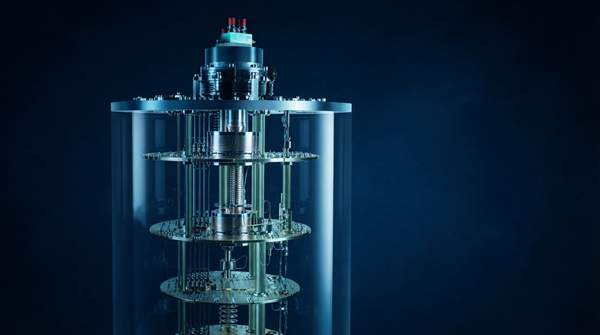
Quantum Machine Learning (QML) is an emerging field that combines the principles of quantum computing with machine learning to solve complex data problems. By leveraging quantum phenomena like superposition and entanglement, QML algorithms process information in fundamentally new ways, offering a theoretical advantage over classical methods for certain computational tasks. This approach is not a universal replacement for traditional machine learning but rather a complementary tool designed to tackle specific, high-complexity challenges that are currently beyond the reach of classical computers.
Understanding Quantum Machine Learning: Core Concepts
At its core, Quantum Machine Learning is an interdisciplinary field that seeks to augment or complement existing classical workflows by integrating quantum mechanics into either the data, the algorithms, or both. According to IBM Quantum Learning, while all possibilities are being explored, much of the current focus is on applying quantum algorithms to classical data, as these problems are well-studied and widely available. The primary motivation, as outlined by author Marin Ivezic on PostQuantum.com, is that as data sets grow and models become more complex, classical computing is increasingly facing limitations in speed and capacity.
QML aims to address these limitations by using quantum computers to explore vast feature spaces and complex optimizations. The field is still in a period of exploration, with researchers actively searching for quantum-amenable datasets and useful quantum feature maps that can unlock the full potential of this technology. The goal is to identify problems where quantum algorithms can offer an exponential speed-up over their classical counterparts, providing a significant computational advantage for tasks that are classically difficult but well-suited to a quantum approach.
Quantum Principles in Action: Data Processing
The potential power of Quantum Machine Learning stems from its ability to process data in a way that is fundamentally different from classical computers. QML algorithms encode classical data into the quantum states of qubits. By utilizing the principles of superposition and entanglement, this information can be mapped into an exponentially large, high-dimensional computational space known as a Hilbert space. This process, sometimes called a quantum feature map, allows the algorithm to identify complex patterns and correlations that might be invisible to classical neural networks operating in a lower-dimensional space.
This high-dimensional mapping is key to QML's theoretical ability to overcome the "curse of dimensionality," a problem that can hinder classical systems dealing with a large number of variables. As explained in a paper available on arXiv.org, the quantum parallelism effect allows computations to be performed on many different states simultaneously, making quantum resources particularly useful for solving problems with an extremely large number of dimensions. While the high dimensionality of entangled states is a critical component, IBM Quantum Learning cautions that this alone is not sufficient to guarantee an advantage over classical algorithms; the problem must also be well-suited to a quantum solution.