In an era grappling with mounting electronic waste, the longevity and repairability of our devices have become critical considerations for tech professionals and environmentally conscious consumers alike. The traditional "3-year laptop refresh" cycle often leads to a shelf full of discarded, yet still functional, hardware. Two prominent laptop lines, Framework Laptops and the Lenovo ThinkPad X1 Carbon Gen 14 Aura Edition, are challenging this paradigm by prioritizing modular design and user-serviceability, aiming to extend product lifespans and reduce environmental impact.
This comparison delves into the specific differences in modularity, ease of repair, and upgrade options between Framework Laptops (specifically models 12 and 16) and the Lenovo ThinkPad X1 Carbon Gen 14 Aura Edition. By examining their documented modular components, official repair support, and independent iFixit repairability scores, we can outline the practical implications for long-term usability, upgradeability, and environmental sustainability, helping you make an informed purchasing decision.
Framework Laptops: The Modularity Champion
Framework has built its brand around the core principles of repairability, longevity, and environmental responsibility. Their laptops are designed from the ground up to be user-serviceable and upgradeable, aiming to break the cycle of rapid hardware obsolescence. Arbory Digital, for instance, adopted Framework Laptops to reduce their environmental impact and extend the useful life of their equipment, noting that nearly every component is user-serviceable and upgradeable.
Framework's modular design allows users to easily replace or upgrade a wide array of components. This includes memory (RAM), storage, Wi-Fi modules, and even the mainboard, which enables users to update their CPU generation without buying an entirely new laptop. The company provides a comprehensive parts store on its website, offering new and upgraded components, and even supports a market for third-party 3D-printed parts. For example, if a Wi-Fi module fails, a new one can be sent directly to the user for easy replacement. The Framework Laptop 16 further extends this modularity to include a readily replaceable graphics module, according to iFixit.
Lenovo ThinkPad X1 Carbon Gen 14 Aura Edition: A Step Towards Repairability
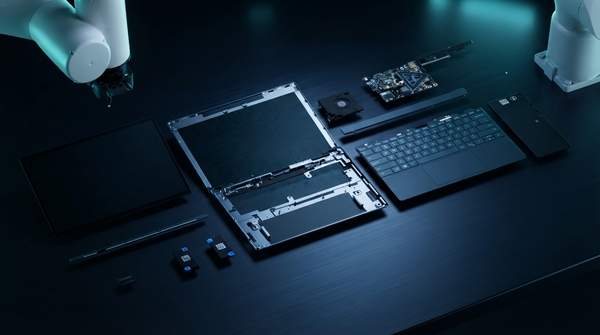
Lenovo's ThinkPad X1 Carbon Gen 14 Aura Edition represents a significant stride for a mainstream manufacturer in embracing repairability. Unveiled at CES 2026, this model garnered attention and an award for its innovative modular design and commitment to repairability, as reported by ZDNET. It features a "Space Frame" design, which contributes to its repair-friendly nature.
While the ThinkPad X1 Carbon Gen 14 Aura Edition boasts a high degree of modularity for components like storage and the battery, and Lenovo provides thorough repair instructions and sells replacement parts, there is a notable limitation. ZDNET's review highlights that the laptop's RAM is soldered, meaning memory cannot be upgraded by the user after purchase. Despite this, iFixit notes that for other ThinkPad models like the 13w 2-in-1 Gen 3, storage and memory (where not soldered) are readily repairable and upgradeable using industry-standard parts, and procedures for the battery, display, and fan are generally straightforward.
iFixit Scores: Practical Implications for Repair Ease
iFixit repairability scores offer an independent assessment of how easy a device is to repair, considering factors like component modularity, availability of parts, and repair documentation. These scores provide practical insights into the real-world effort and cost involved in maintaining a laptop.
The Lenovo ThinkPad X1 Carbon Gen 14 Aura Edition achieved an impressive 9/10 iFixit repairability score, a testament to its modular "Space Frame" design and Lenovo's commitment to facilitating repairs, according to ZDNET. This high score indicates that many common repairs are straightforward. For instance, iFixit notes that for other ThinkPad models, storage and memory (when not soldered) are easily upgradeable with standard parts, and Lenovo provides comprehensive repair instructions and sells replacement parts.
Framework Laptops, including models 12 and 16, consistently receive high iFixit repairability scores. iFixit describes the Framework Laptop 12 as having a "highly modular design" that makes "nearly all common repairs very easy," with "friendly labels and QR codes" internally. The Framework Laptop 16 is also praised for prioritizing repairability "from top to bottom," with "virtually all major components" being modular and readily replaceable, including the graphics module. Framework typically offers a factory service manual and a robust selection of replacement parts for end users, further simplifying repairs.
Upgradeability: Extending Lifespan and Performance
The ability to upgrade key components is crucial for extending a laptop's useful life and adapting it to evolving performance demands. Here, the two laptop lines present distinct approaches.
Framework Laptops offer extensive upgrade paths. Users can easily replace RAM and storage with industry-standard parts. More significantly, Framework allows for mainboard swaps, enabling users to upgrade to newer CPU generations without replacing the entire chassis. This means a Framework Laptop can evolve with technological advancements, potentially serving a user for many years. The Framework Laptop 16 further enhances upgradeability with its modular and replaceable graphics module.
In contrast, the Lenovo ThinkPad X1 Carbon Gen 14 Aura Edition, while offering modularity for storage, has a significant limitation: its RAM is soldered. This means that users must decide on their required memory capacity at the time of purchase, as it cannot be upgraded later. While other components like the battery and display are designed for straightforward replacement, the soldered RAM restricts a fundamental aspect of long-term performance enhancement.
Environmental Impact: Reducing E-Waste Through Design
Both Framework Laptops and the Lenovo ThinkPad X1 Carbon Gen 14 Aura Edition contribute to environmental sustainability by addressing the pervasive issue of electronic waste. The tech industry's common practice of cycling through laptops every few years generates significant e-waste, a problem Framework explicitly aims to combat.
Framework's design philosophy is centered on reducing environmental impact, empowering users, and stretching the useful life of hardware. By making nearly every component user-serviceable and upgradeable, Framework encourages users to repair and upgrade their devices rather than replacing them entirely. This approach directly reduces the volume of discarded electronics. Arbory Digital, for example, highlighted that their switch to Framework Laptops was driven by a desire to reduce e-waste and extend the life of their gear, even donating swapped-out components to schools and community groups.
Lenovo's commitment to repairability with the ThinkPad X1 Carbon Gen 14 Aura Edition also plays a role in sustainability. By designing a laptop that scores highly on iFixit's repairability scale and providing repair instructions and parts, Lenovo enables users and technicians to fix components rather than disposing of the entire device. While the industry still largely moves towards less repairable designs, Framework has "restarted conversations around feasible consumer machines with modular components," as noted by XDA, pushing for a shift towards long-term value and reduced waste.
Conclusion: Choosing Your Sustainable Tech Companion
For tech professionals prioritizing maximum longevity, generational upgrades, and component-level customization, Framework Laptops stand out as the stronger choice. Their highly modular design, encompassing mainboard swaps for CPU upgrades, user-replaceable RAM and storage, and readily available parts, offers unparalleled flexibility to extend a device's lifespan and adapt to future needs. This approach directly translates into a significant reduction in e-waste and a more sustainable computing experience.
The Lenovo ThinkPad X1 Carbon Gen 14 Aura Edition, on the other hand, represents a commendable effort from a mainstream manufacturer to embrace repairability. Its impressive 9/10 iFixit score and modular "Space Frame" design make many common repairs straightforward, supported by Lenovo's provision of repair instructions and parts. However, the soldered RAM remains a key limitation for memory upgrades, meaning users must commit to a memory configuration at purchase. While it contributes to sustainability through repairability, it offers less long-term upgrade flexibility compared to Framework.
Ultimately, your decision hinges on your priorities. If comprehensive, future-proof upgradeability and the highest degree of user control over every component are paramount, Framework Laptops are designed for you. If you seek a premium business laptop with excellent repairability for most components and a strong commitment to serviceability, but are content with fixed RAM, the ThinkPad X1 Carbon Gen 14 Aura Edition is a highly capable and more sustainable option than many alternatives.
Sources
- Laptop Repairability Scores | Most Repairable Laptops — iFixit
- I tested Lenovo's new modular ThinkPad, and it renewed my faith in repairable laptops - ZDNET — ZDNET
- Framework Laptops & Hardware Sustainability & breaking the "3-year laptop refresh" — BLOG
- Framework proved repairable laptops can work, but almost nobody is willing to buy one — XDA