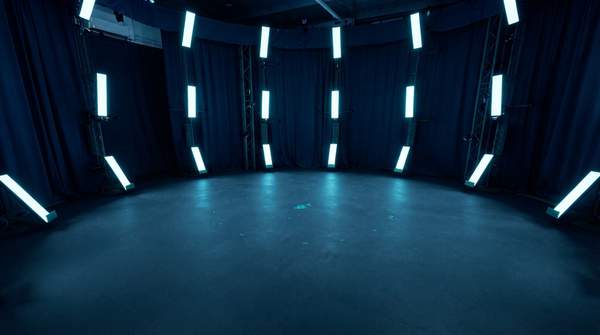
Real-time volumetric video works by running a recorded performance through a three-stage pipeline: multi-camera capture, 3D reconstruction and compression, and real-time rendering on a VR or AR device. Each stage transforms the data — from raw multi-view images to a navigable 3D representation to an interactive scene — and each forces the same underlying engineering bargain between visual fidelity, data size, and playback speed. Understanding that pipeline, and where its bottlenecks sit, is the key to judging whether the technology fits a given project.
Introduction to Volumetric Video for Immersive Experiences
Volumetric video records a 3D space and the dynamic events inside it, so viewers can later explore the scene from virtually any vantage point. Aashish Rai, the Brown University graduate student who led development of the PackUV processing method, describes it as capturing "three dimensions of space, plus time, making it a 4D video." Unlike a flat video or a 360-degree panorama, the result is a spatialized recording the viewer can move through.
That difference matters for immersive applications. Industry writing on capture and streaming argues that volumetric content is more compelling than 360 video because it "allows for a more intimate connection and brings the power of presence closer to that of reality." A widely referenced overview of the field frames it as the logical successor to stereoscopic film and 360 video, combining photographic visual quality with the interactivity of spatial content — potentially the most important development in recording human performance since contemporary cinema.
The Volumetric Video Pipeline: From Capture to Immersion
The clearest way to understand the technology is to trace the data through its three sequential stages. Each stage has a distinct goal, a distinct set of techniques, and a distinct output that becomes the next stage's input.
| Stage | Goal | Key Technologies and Challenges | Output / VR-AR Relevance |
|---|---|---|---|
| Capture | Record a 3D space and dynamic events from many viewpoints | Multi-camera arrays; portable rigs with designed camera deployment; part of wider pipelines that can include 3D scanning and motion capture | Synchronized multi-view image and audio data |
| Reconstruction and compression | Fuse captured data into a complete volumetric representation and shrink it for delivery | Data fusion, 3D/4D reconstruction, neural rendering, Gaussian-based representations; terabyte-scale raw data and streaming-incompatible formats | A time-varying 3D model compact enough to store and stream |
| Rendering | Display the model interactively in real time | Real-time engines resembling a game pipeline; real-time neural rendering and 3D/4D Gaussian splatting running in VR headsets | Interactive 3D content the viewer can move around in VR/AR |
The sequence is what makes interactivity possible: without multi-view capture there is nothing to reconstruct, and without efficient reconstruction and compression there is nothing a headset can render at interactive frame rates. A CVPR 2025 research effort on immersive volumetric video describes exactly this chain — constructing volumetric videos from multi-view audiovisual inputs to enable six-degrees-of-freedom VR experiences, where the viewer can both look and move freely within the scene.