Imagine not just seeing a virtual world, but feeling the brush of a digital breeze or the impact of a virtual raindrop across your entire body. This immersive sensation is now closer to reality, thanks to new textile-based haptic feedback technologies. Advanced suits, featuring nodes weighing just 5 grams, deliver tactile sensations with end-to-end latency reduced to approximately 40 ms, according to Nature.
Existing haptic feedback systems limit sensations to specific body parts, constraining the ambition for truly transformative, full-body immersion in VR/AR. New full-body wearable technologies, however, are overcoming these restrictions to deliver unprecedented immersion. This widespread adoption of truly immersive, full-body haptic feedback appears likely to redefine user expectations for virtual and augmented reality experiences.
What is Haptic Feedback?
Haptic feedback creates an experience of touch by applying forces, vibrations, or motions to the user. This tactile dimension enhances digital interaction, making experiences more intuitive and engaging. Basic forms, like a phone's vibration alerts or a game controller's rumble, provide a physical response to digital events, according to Britannica. Even these simple haptics set a precedent, suggesting that deeper physical engagement can transform digital interaction from passive observation to active participation.
The Science of Full-Body Touch
Material science advancements now enable sophisticated haptic experiences. A wearable haptic artificial muscle skin (HAMS), based on soft, millimeter-scale, multilayer dielectric elastomer actuators (DEAs), provides precise, localized stimuli across the skin, according to Science | AAAS. These DEAs function as artificial muscles. Such innovations allow haptic feedback to seamlessly integrate into everyday wearables, mimicking natural skin sensations and moving beyond simple vibrations.
Overcoming the Limits of Partial Immersion
Despite haptic technology's potential, current implementations often deliver only partial immersion. Existing wearable platforms, limited to specific anatomical regions like hands or arms, restrict realism for full-body applications, according to Nature. This confined scope creates a significant gap: for a virtual experience to truly convince the brain, tactile feedback must extend beyond isolated points to encompass a broader bodily sensation.
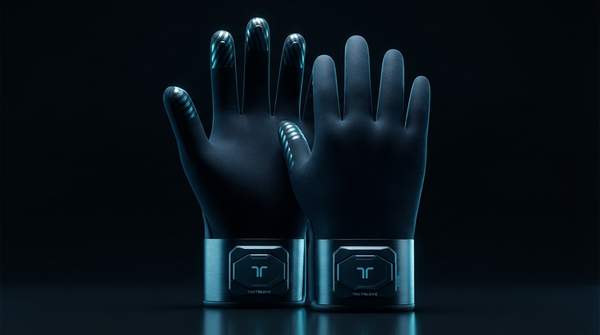
Why Full-Body Haptics Changes Everything
Full-body haptic suits mark a significant breakthrough in immersive technology. The TESS study, for instance, introduces a textile-based, lightweight, durable full-body electrical stimulation suit (TESS) integrated into a compression garment, Nature reports. This integration enhances comfort and wearability, making prolonged use practical. Full-body haptic suits move beyond localized feedback, enabling comprehensive tactile immersion in virtual environments.
How Advanced Haptic Systems Work
Components of a Full-Body Haptic System
The TESS system employs a network of flexible, skin-conformal patches distributed across the body. Each patch contains a triaxial accelerometer, a haptic actuator, and a BLE-enabled System-on-Chip (SoC) for processing and communication. This modular, distributed design is crucial for precise, localized haptic feedback across diverse body contours.
Ensuring User Comfort
Full-body haptic suits prioritize user comfort through design and material choices. The TESS suit integrates into a compression garment, ensuring a snug, flexible fit that moves naturally with the body. This approach, combined with soft, skin-conformal patches, aims to make the technology feel like a second skin, facilitating prolonged wear without discomfort.
Generating Diverse Sensations
Advanced haptic systems, especially those using electrical stimulation like TESS, generate a wide range of sensations. Beyond simple vibrations, these systems simulate varying levels of pressure, light touches, textures, and even temperature changes. This capability allows for a nuanced, realistic tactile experience, from feeling a virtual object's impact to a digital breeze's subtle sensation.
The Future is Tactile
Practical and material innovations are crucial for future adoption. The TESS suit utilizes a dehydration-mitigating conductive hydrogel (DMCH) and stretchable, textile-printable conductive ink for robust electrical interconnectivity, according to Nature. These advanced materials, like DMCH for maintaining conductivity and user comfort, and stretchable inks for seamless fabric integration, are essential for durable, comfortable, and effective full-body haptic systems.
If current trends continue, the integration of full-body haptic feedback, exemplified by TESS's 5-gram nodes and 40ms latency, will likely compel VR/AR developers to prioritize multi-sensory immersion, fundamentally redefining user expectations for digital experiences by 2026.