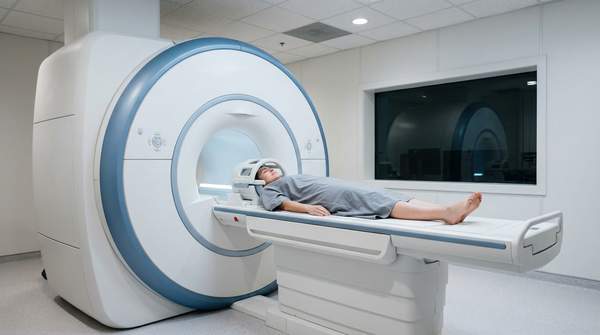
Paying for an MRI or CT scan yourself can give you more flexibility over where you receive diagnostic imaging. You can research local facilities, compare cash prices, and look for appointment times that fit your schedule.
But there is often one important requirement before you can book the scan: a provider order.
That requirement can create a problem for people who do not have insurance, have a high deductible, do not have a regular primary care doctor, or simply cannot get a traditional appointment quickly.
Diagnostic Orders Direct provides a $40 virtual provider review for MRI and CT order requests in supported states. A licensed provider reviews the patient's information and determines whether the requested study is medically appropriate. If an order is issued, the patient can take it to an imaging facility that accepts outside provider orders.
The result is a clear separation between obtaining the clinical order and choosing where to have the actual scan performed.
Why Self-Pay Patients Often Shop Around
When insurance is not paying the entire bill, the price difference between imaging facilities can matter.
Two facilities in the same general area may quote different self-pay prices for the same broad category of imaging. The final cost can also depend on the body part being scanned, the imaging protocol, whether contrast is required, and other facility-specific factors.
Diagnostic Orders Direct does not operate the imaging center.
Instead, the company provides the virtual provider review and, when medically appropriate, the order. Patients then choose a facility that accepts the order.
That arrangement gives self-pay patients the ability to investigate their options rather than automatically using whichever imaging facility happens to be associated with a provider's office.
The First Step Is the Provider Review
A common misconception about self-pay imaging is that paying cash means a patient can simply order any scan.
That is not how the Diagnostic Orders Direct process works.
The patient submits a request and provides information about symptoms, medical history, and the requested diagnostic study. A licensed provider then conducts a virtual consultation and evaluates whether the requested test is medically appropriate.
If the provider approves the request, the diagnostic order is issued.
If the provider determines that the requested test is not appropriate based on the available information, an order may not be issued.
The $40 fee therefore pays for the professional review—not for a guaranteed MRI or CT prescription.
How Much Should You Budget?
Diagnostic Orders Direct currently lists general self-pay estimates of approximately $300–$800 or more for MRI and $400–$900 or more for CT scans.
Those figures are not guaranteed prices. Actual costs vary by facility, location, imaging protocol, and other factors.
The $40 Diagnostic Orders Direct provider-review fee is separate.
That means a patient considering self-pay imaging should think about the cost in two parts:
The first is the provider review required to determine whether an order can be issued.
The second is the actual imaging charge from the facility.
Keeping these expenses separate can make it easier to compare imaging options and understand what you are actually paying for at each stage.
How to Find a Self-Pay Imaging Facility
Once you have an order, you can begin comparing facilities that accept it.
Start by asking the imaging center for its cash or self-pay price for the exact study ordered.
Do not rely solely on a general advertised MRI or CT price. Ask whether the quoted price includes the full facility charge and whether additional charges may apply.
For CT scans, also ask whether the examination involves contrast and whether the facility requires recent laboratory results or other information.
For MRI, ask about the specific body area and protocol included in the quote.
You should also confirm that the facility accepts outside orders from telehealth providers.
Diagnostic Orders Direct specifically notes that facility acceptance varies.
Why the Facility's Acceptance Policy Matters
An order is a clinical document, but individual facilities determine whether they will accept external orders.
This is why patients should contact their preferred imaging center before scheduling.
Ask a simple question: “Do you accept orders from outside licensed telehealth providers?”
If the answer is yes, ask whether there are any formatting, documentation, or scheduling requirements.
If the facility does not accept outside orders, you can look for another facility that does.
Taking this step before paying for the scan can help prevent avoidable scheduling problems.
MRI or CT? Let the Provider Review the Request
Patients sometimes know they need “imaging” without knowing which imaging modality is appropriate.
MRI and CT are not interchangeable.
MRI is commonly used for detailed imaging of soft tissues and can be requested for areas such as the brain, spine, knee, and shoulder.
CT produces rapid cross-sectional images and can be used for a range of clinical situations involving the head, chest, abdomen, pelvis, sinuses, and other areas.
The appropriate study depends on the clinical circumstances.
Diagnostic Orders Direct's provider review gives a licensed professional an opportunity to evaluate the requested test rather than simply processing whatever study a patient selects.
What About Insurance Prior Authorization?
Insurance and provider orders are related but different concepts.
A provider order is the clinical authorization for a diagnostic test.
Prior authorization is an insurance process in which the insurer determines whether it will cover a particular service under the patient's policy.
Self-pay patients may not encounter the same insurance authorization pathway because they are paying directly, but the imaging facility may still have its own requirements.
An order from Diagnostic Orders Direct does not guarantee insurance coverage or facility acceptance.
Patients using insurance should verify their plan requirements separately. Patients paying cash should confirm the facility's self-pay policies before scheduling.
A Convenient Option for Patients Without a PCP
A lack of a primary care provider should not necessarily mean that you cannot have a diagnostic request clinically reviewed.
Diagnostic Orders Direct specifically serves situations in which patients may not have an established PCP or may be unable to obtain an appointment quickly.
The virtual format means the provider review can be completed remotely, without requiring an in-person office visit.
For eligible patients in supported states, that can provide another route to obtaining a diagnostic order.
What Diagnostic Orders Direct Does Not Cover
The $40 fee does not pay for the MRI or CT scan.
It also does not include radiologist fees, contrast charges, or other facility costs that may apply.
Diagnostic Orders Direct is not an imaging center or laboratory. It does not interpret imaging results, diagnose conditions, or provide emergency treatment.
The company's role is the virtual provider review and potential issuance of an appropriate diagnostic order.
A More Direct Starting Point for Self-Pay Imaging
For self-pay patients, the biggest advantage of an online provider review may be flexibility.
You can seek the clinical review online, receive an order if the provider determines that the study is appropriate, and then research imaging facilities that accept the order.
That allows you to consider location, scheduling, and self-pay pricing independently.
If you need an MRI or CT order and do not have a convenient traditional referral pathway, Diagnostic Orders Direct offers a $40 virtual provider review to get the process started.
The key is to approach the process realistically: an order is not guaranteed, imaging costs are separate, and facility acceptance must be confirmed.
With those points understood, an online provider review can be a practical option for patients looking for a more flexible way to begin self-pay diagnostic imaging.