What is AI in Disease Diagnosis and Why Does it Matter?

In a growing number of cases, AI algorithms are diagnosing diseases from imaging scans with higher accuracy and speed than human radiologists, according to the cdc .

MR
Mateo Rossi

May 29, 2026 · 5 min read

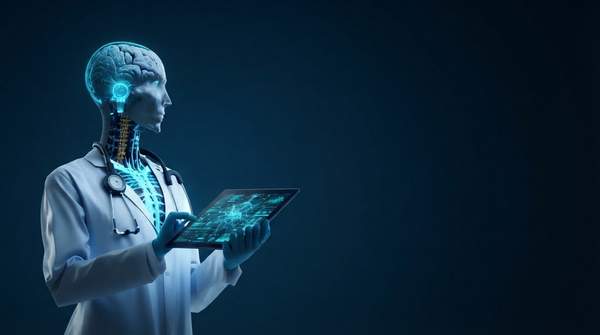
An advanced AI system in a medical setting, displaying a detailed 3D scan with glowing data points, symbolizing precise disease diagnosis.

In a growing number of cases, AI algorithms are diagnosing diseases from imaging scans with higher accuracy and speed than human radiologists, according to the cdc. AI algorithms diagnosing diseases from imaging scans with higher accuracy and speed than human radiologists will reshape medical practice as AI and machine learning advance into 2026. For patients, this means earlier detection and more precise treatment plans, reducing the agonizing wait for answers and improving health outcomes across the board.

Medical diagnosis has historically relied on extensive human expertise and intuition, but AI now consistently demonstrates superior accuracy and speed in identifying complex conditions. AI's consistent demonstration of superior accuracy and speed in identifying complex conditions fundamentally challenges established medical paradigms, forcing a re-evaluation of how doctors are trained and how healthcare is delivered.

The future of medicine will increasingly integrate AI as a primary diagnostic and predictive tool, demanding a fundamental shift in medical training and practice to maximize its benefits while navigating ethical considerations.

The Foundation: How AI Pinpoints Disease

The Food and Drug Administration approved IDx-DR, an AI system designed to detect diabetic retinopathy, a significant regulatory milestone for automated diagnostics. The FDA approval of IDx-DR confirms AI's established capability to reliably diagnose specific diseases, laying the groundwork for broader integration into clinical practice, according to pmc. The system identifies signs of the eye disease directly from retinal images, providing an immediate assessment without requiring a specialist to interpret the results.

The initial regulatory acceptance of IDx-DR confirms AI performs core diagnostic tasks with high efficacy and safety. These validated applications prove AI's foundational role in augmenting, and in some cases, automating, diagnostic processes once solely human. The precision and speed offered by these systems significantly reduce diagnostic backlogs, particularly in areas with limited access to specialized medical professionals.

Based on the FDA approval of IDx-DR, medical institutions delaying AI integration into diagnostic workflows compromise patient outcomes and efficiency. Healthcare providers must embrace AI-driven tools to maintain competitive and effective patient care standards.


Beyond Human: AI's Superior Diagnostic Precision

The measurable superiority of AI algorithms in diagnosing diseases from imaging scans challenges the historical gold standard of human expertise, according to the cdc. In one instance, a feed-forward neural network achieved 100% accuracy in diagnosing liver disease hepatitis virus, as reported by pmc. The 100% accuracy achieved by a feed-forward neural network in diagnosing liver disease hepatitis virus establishes new benchmarks for diagnostic reliability that human capabilities struggle to match consistently.

AI's capacity to achieve diagnostic precision rivals or surpasses human experts, particularly in complex pattern recognition and image analysis. AI systems process vast datasets of medical images, identifying subtle patterns and anomalies that might escape the human eye due to fatigue, cognitive bias, or sheer volume. AI systems' consistent high accuracy and speed in processing vast datasets of medical images profoundly impacts fields like radiology and pathology, where image interpretation is central to diagnosis.

The consistent outperformance of human specialists in initial detection across various conditions, from diabetic retinopathy to subtle cardiac arrhythmias, suggests a future where human specialists are consistently outmatched. The consistent outperformance of human specialists in initial detection across various conditions demands a redefinition of the radiologist's role, shifting focus from primary image interpretation to oversight, complex case consultation, and treatment planning.

Proactive Care: Predicting, Personalizing, and Preventing

AI can forecast disease outbreaks, hospital readmission rates, and a patient's risk of developing chronic illnesses by analyzing vast datasets, states the cdc. AI's predictive power to forecast disease outbreaks, hospital readmission rates, and a patient's risk of developing chronic illnesses shifts healthcare from a reactive model to a profoundly proactive one, allowing for interventions before conditions worsen. Moreover, AI can tailor medical treatments to individual genetic profiles, improving outcomes and minimizing side effects, also noted by the cdc. Together, these capabilities mean medicine can anticipate health challenges and customize care at an unprecedented level, moving beyond generalized approaches to truly individualized patient journeys.

AI-enhanced cardiac monitors utilize machine learning to detect subtle arrhythmias and predict potential cardiac events with high accuracy, according to Nature. These systems provide continuous, real-time insights into patient health, enabling clinicians to intervene at the earliest signs of trouble. The proactive stance enabled by continuous, real-time insights from AI-enhanced cardiac monitors fosters personalized treatment strategies, moving beyond generalized care to interventions tailored to an individual's unique biological and health data.

AI's predictive power and ability to personalize treatments and monitor health in real-time transform healthcare from reactive to proactive, enabling earlier interventions and more tailored patient care pathways. The transformation of healthcare from reactive to proactive by AI's predictive power and ability to personalize treatments and monitor health in real-time means averting crises before they manifest, potentially saving lives and significantly reducing healthcare costs associated with advanced disease management. The profound implication is that the very definition of 'healthy' will evolve, as continuous AI monitoring could make chronic disease management a relic of the past for many, replaced by constant optimization.

Global Impact: From Patient Safety to Resource-Limited Settings

Computer vision and AI-powered camera systems in operating rooms detect medication errors in real-time by analyzing labels, dosages, and administration procedures against patient data and standard protocols, according to Nature. The capability of computer vision and AI-powered camera systems in operating rooms to detect medication errors in real-time significantly enhances patient safety, providing an immediate, objective layer of error detection during critical medical procedures. Such systems act as a vigilant second pair of eyes, reducing human oversight.

In resource-limited settings, AI-enabled photoplethysmography (PPG) wearables predict the deterioration of dengue fever hours in advance, supporting clinical decision-making, as reported by Nature. AI-enabled photoplethysmography (PPG) wearables predicting the deterioration of dengue fever hours in advance provides a lifeline where advanced diagnostic equipment and specialists are scarce. Early warnings from these wearables enable timely interventions, crucial for managing diseases like dengue effectively and preventing severe outcomes.

AI is proving instrumental in addressing critical global health challenges, from enhancing patient safety through real-time error detection to enabling advanced diagnostics in underserved regions worldwide. The capacity of AI to detect real-time medication errors in operating rooms and predict dengue deterioration hours in advance reveals that the future of patient safety and preventative care lies in continuous, AI-powered monitoring, making traditional episodic human oversight increasingly insufficient.

How is AI used in medical diagnosis?

AI in medical diagnosis processes vast amounts of data, including imaging scans, patient records, and genetic information, to identify disease patterns. For example, AI can detect subtle cardiac arrhythmias from wearable devices or analyze complex genetic markers to predict disease risk, often with greater consistency than human interpretation alone.

What are the benefits of AI in healthcare?

AI offers numerous benefits, including increased diagnostic accuracy and speed, personalized treatment plans tailored to individual patient data, and enhanced operational efficiency in hospitals. It also helps in reducing human error, optimizing resource allocation, and expanding access to specialized medical expertise in remote areas.

What are the challenges of AI in patient care?

Integrating AI into patient care presents challenges such as ensuring data privacy and security, addressing potential algorithmic biases that could exacerbate health disparities, and overcoming the high costs and complexity of implementation. Ethical considerations surrounding AI's decision-making autonomy and the need for robust regulatory frameworks also remain significant hurdles.

If medical institutions do not fully integrate AI into their diagnostic workflows by Q4 2026, they will likely struggle to maintain optimal patient outcomes and operational efficiency in a rapidly evolving healthcare landscape.